What Is a Biodome? Inside the Living World Built by Humans
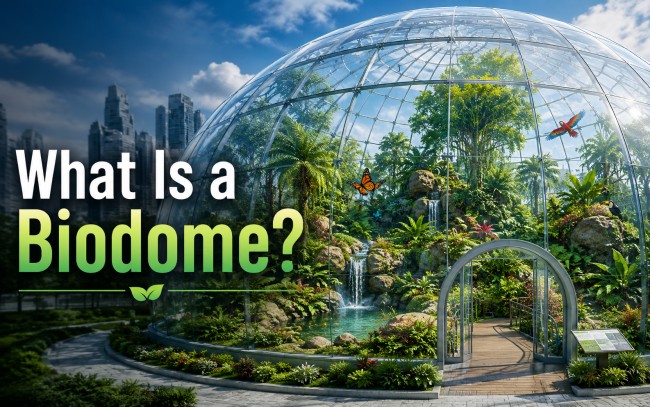
A biodome is a large enclosed space designed to copy a natural ecosystem. It may contain plants, animals, soil, water, rocks, insects, fungi, and microorganisms. Special equipment controls temperature, light, humidity, airflow, and water. Some biodomes welcome visitors, while others support science, conservation, farming, or space studies. Each one shows how air, water, soil, plants, and animals depend on one another.
What Is a Biodome?
The term combines “bio,” meaning life, with “dome,” meaning a covered structure. A biodome is a protected building that supports a living environment. It does not always have a round roof. Some use connected domes, glass halls, steel frames, or clear panels. The controlled habitat inside matters more than the shape. A biodome may recreate a rainforest, desert, wetland, forest, coast, ocean, or cold habitat. Large facilities can contain several climate zones under one roof.
How Does a Biodome Work?
A biodome brings living and non-living parts together in a managed setting. Plants, animals, soil, water, air, and microbes form a connected system. Machines maintain safe conditions, while trained workers care for the species and equipment.
Climate Control
Every habitat needs a suitable climate. A rainforest requires warmth and high humidity. A desert needs dry air, strong light, and less water. A cold coastal zone may need powerful cooling. Heating, cooling, ventilation, misting, pumps, filters, lights, and sensors prevent sudden changes that could harm living species.
Temperature and Humidity
Temperature affects plant growth, animal health, soil activity, and water loss. Humidity controls how quickly moisture leaves plants and soil. Excess heat can dry the habitat. Too much moisture can support mould and disease. Careful control keeps the environment stable.
Light and Photosynthesis
Plants need light to make food through photosynthesis. They absorb carbon dioxide, use water and sunlight, and release oxygen. Sunlight enters through transparent roofs and walls. Artificial lights may support growth during dark weather or short winter days. Light also controls flowering, fruit production, animal behaviour, and sleep cycles.
Water Systems
Water may move through ponds, streams, waterfalls, irrigation lines, and tanks. Plants absorb it through their roots and release moisture through their leaves. Water vapour can cool, become liquid, and return to storage. Filters remove dirt before pumps send the water back into the habitat.
What Is a Biodome Made Of?
A biodome contains many parts that work as one system.
Plants
Plants form the base of most biodomes. They create food, release oxygen, provide shade, hold soil in place, and offer shelter. Tall trees may form a canopy, while smaller plants fill the lower areas.
Animals
Animals may include fish, birds, reptiles, amphibians, insects, and small mammals. Some eat plants, while others eat smaller animals. Some animals pollinate flowers, spread seeds, or control smaller populations. Their numbers must remain balanced. Too many plant-eaters can damage vegetation, while too many predators can reduce prey.
Soil and Decomposers
Healthy soil contains minerals, water, air, roots, fungi, bacteria, and tiny animals. It stores nutrients and supports plant growth. Fungi and bacteria break down dead leaves, waste, and other natural material. Nutrients return to the soil and support new growth.
Natural Cycles Inside a Biodome
A biodome depends on cycles that move water, gases, energy, and nutrients.
Oxygen and Carbon Dioxide
Plants absorb carbon dioxide and release oxygen during photosynthesis. Animals and humans use oxygen and release carbon dioxide. Microbes also use oxygen while breaking down waste. The balance between oxygen production and use must remain safe.
Nutrient Cycle
Dead leaves, animal waste, and organic matter contain useful nutrients. Fungi, bacteria, and insects break them down. Plants then absorb the nutrients through their roots.
Food Web
Plants provide energy for plant-eating animals. Predators gain energy by eating other animals. Decomposers process what remains. Its food web can be delicate because the loss of one species may affect many others.
Main Types of Biodomes
Public Biodomes
Public biodomes combine education, gardens, wildlife care, and tourism.
Scientific Biodomes
These facilities help experts test changes in climate, water, soil, plants, and animal behaviour.
Closed Ecological Systems
A closed ecological system tries to recycle air, water, nutrients, and waste with very little material from outside. Sunlight or electricity still provides energy. A fully closed system is hard to maintain because small changes can create serious problems.
Why Are Biodomes Important?
Education
Biodomes help people experience climates and habitats they may never visit. Seeing plants, water, and animals together makes environmental lessons easier to understand.
Conservation
Controlled habitats can support rare plants and animals. They may provide protection from extreme weather, pollution, disease, and habitat loss.
Climate Studies
Experts can test how ecosystems respond to heat, drought, changing rainfall, and higher carbon dioxide levels. The results improve knowledge of forests, crops, wetlands, oceans, and soil.
Space Exploration
Future Moon or Mars settlements will need safe air, clean water, food, and waste control. Biodome studies test how plants, microbes, and machines can work together. Plants may provide food and oxygen, while microorganisms may help process waste.
Famous Biodomes and Similar Projects
Montréal Biodôme
The Montréal Biodôme in Canada contains tropical, woodland, marine, coastal, and cold ecosystems. It works as a nature museum and wildlife facility.
Biosphere 2
Biosphere 2 in Arizona became well known after people lived inside its mostly sealed environment. It included a rainforest, ocean, wetland, grassland, dry zone, farm, and living quarters. The project faced falling oxygen, food problems, species loss, and ecological imbalance. These challenges showed how difficult it is to copy nature in a closed building.
Eden Project
The Eden Project in Cornwall uses connected structures filled with plants from tropical and mild climates. It supports education, sustainability, and tourism.
Biodome Compared With Similar Terms
Biodome vs Biome
A biome is a large natural region shaped by climate, plants, and animals. A biodome is a human-made structure that copies some conditions of a biome.
Biodome vs Greenhouse
A greenhouse is mainly designed to grow plants. A biodome may contain plants, animals, soil life, water systems, and food webs.
Biodome vs Biosphere
The biosphere includes every part of Earth where life exists. A biodome is a smaller controlled environment within it.
Can Humans Live in a Biodome?
Humans can live in a biodome for a limited time when it provides food, oxygen, clean water, waste treatment, safe temperatures, and medical support. Long-term life without outside help is much harder. Crops can fail, equipment can break, pests can spread, and oxygen levels can change.
Challenges of Biodomes
Biodomes can be expensive to build and operate. Heating, cooling, lighting, pumping water, filtering air, and caring for animals use energy and skilled labour. A small ecosystem contains fewer species than nature. If one species is lost, another may not fill its role. Most biodomes are not self-sufficient. They need electricity, food, medicine, repairs, testing, and expert care.
Final Thoughts on What Is a Biodome
What is a biodome can be answered simply: it is a controlled structure that recreates a living ecosystem. It brings together air, water, soil, plants, animals, microbes, and technology. It can support education, conservation, science, tourism, and space planning. Biodomes are not perfect copies of nature, and most depend on human support. Even so, they offer a powerful way to study life and understand the balance that keeps ecosystems healthy.