Honorlock Explained: The Truth Behind Online Exam Proctoring
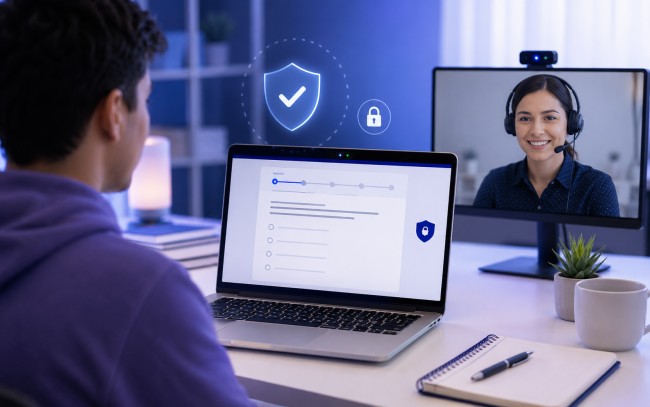
Honorlock is an American education technology company that provides online exam proctoring services. Its platform helps universities, colleges, professional organisations and companies protect examinations from cheating. The company combines artificial intelligence with human proctors. The software identifies unusual activity, while trained staff review possible problems and contact the test-taker when necessary.
What Is Honorlock?
Honorlock provides tools that monitor online examinations through a web browser, webcam, microphone and computer screen. Institutions choose which features students must use for each examination. Some tests require only a Chrome browser extension. Other examinations require identity checks, a room scan, screen recording, audio recording or an additional desktop application. The company’s main purpose is to protect academic integrity. It also serves certification bodies, corporate training teams, licensing organisations and employers conducting online assessments.
The History of Honorlock
How Honorlock Started
Honorlock was founded in 2014 by Adam Roth and Elena Soboleva, two students at Florida Atlantic University in the United States. The founders became concerned about cheating during online examinations. They created an early system that could identify when students accessed unauthorised examination material on the internet.
To test their idea, they created a fake online examination. The experiment found that many students attempted to access the material, proving that online assessment security needed stronger tools. The company later joined Florida Atlantic University’s Tech Runway programme. This support helped the founders develop their early idea into a commercial education technology business.
Company Growth
Honorlock first raised money from local investors and technology supporters. In 2019, it announced a $2.5 million funding round and stated that total funding had reached approximately $4.2 million. In March 2020, the company raised $11.5 million in Series A funding. The round was connected with Defy Partners and helped the company expand its technology, sales team and customer base.
In April 2021, Honorlock raised a further $25 million in Series B funding. Owl Ventures led the round, with support from Defy Partners, Arsenal Growth and earlier investors. Based on these funding announcements, the company has received approximately $40.7 million in disclosed investment. Honorlock remains a private company, so its exact revenue, profits, valuation and ownership percentages are not available.
Company Details
Headquarters and Legal Status
The legal name of the business is Honorlock, Inc. It is incorporated in Delaware and registered to operate in Florida as a foreign profit corporation. Florida corporate records show that the company remains active. Its principal office is located at 2500 North Military Trail, Suite 322, Boca Raton, Florida.
Michael Hemlepp is the chief executive officer and a company director. Patrick Henn is named as chief financial officer. Other directors include Daniel Cane, Steven Miller, Thomas Whytas, Neil Sequeira and Amit Patel. LinkedIn places the company in the 51–200 employee category. The exact current number of employees has not been officially confirmed.
Quick Information About Honorlock
| Category | Details |
|---|---|
| Company | Honorlock, Inc. |
| Founded | 2014 |
| Founders | Adam Roth and Elena Soboleva |
| Headquarters | Boca Raton, Florida, USA |
| Industry | Education Technology |
| CEO | Michael Hemlepp |
| Main Service | Online exam proctoring |
| Technology | Artificial intelligence and human proctors |
| Key Features | ID checks, webcam monitoring, browser lockdown and phone detection |
| Customers | Universities, colleges, companies and certification bodies |
| Funding | Approximately $40.7 million disclosed |
| Company Status | Private and active |
| Standard Data Retention | 365 days, depending on institutional settings |
| Website | honorlock.com |
What Services Does Honorlock Provide?
Honorlock sells online assessment security to institutions and organisations. Customers normally purchase the service through a customised agreement rather than a simple public subscription. Pricing may be based on annual licensing, student numbers, examination volume or a fee for each examination. The final cost depends on the customer’s size, selected features and contract terms.
Main Honorlock Features
The platform offers a wide range of tools, including:
- Artificial intelligence exam monitoring
- Human proctor support
- Browser lockdown
- Identity verification
- Webcam and microphone monitoring
- Desktop recording
- Mobile phone detection
- Smartwatch and tablet detection
- Voice detection
- Artificial intelligence tool blocking
- Second-camera monitoring
- Workspace scanning
- Examination recording and time-stamped reports
- Learning management system integration
- Removal requests for leaked examination material
- Institutional analytics and usage reports
The system supports platforms such as Canvas, Blackboard, Moodle, Brightspace, D2L, Docebo and other learning systems.
How Honorlock Works During an Exam
Before the Examination
Students usually enter their institution’s learning system and open the examination. They may need to install the Chrome extension and complete a system check. Depending on the examination settings, the student may provide their name, student ID, government ID, photograph or webcam image. The student may also need to show the testing area with a camera. This can include a 360-degree room scan, although the institution decides whether this feature is required.
During the Examination
The software may monitor the student’s webcam, microphone, screen, browser activity and examination navigation. It can record websites visited during the test and identify attempts to open blocked pages or applications. Some institutions also require the desktop application, which can detect software running outside the browser.
Artificial intelligence flags activity that may require attention. A human proctor then reviews the situation and may contact the student through live chat. Honorlock does not decide academic guilt by itself. The instructor or institution normally reviews the evidence and decides whether a violation took place.
After the Examination
After the test ends, authorised staff may review recordings, time-stamped events and examination reports. Students can remove the Chrome extension after completing the test. The desktop application can be removed through the normal software settings on Windows or macOS.
Privacy and Data Collection
What Data May Be Collected?
The exact data depends on the settings selected by the institution. Possible data includes the student’s name, email address, course details and student number. The system may also collect details from an identity document, such as a photograph, date of birth, address or identification number.
During the test, it may collect webcam video, microphone audio, screen recordings, browser activity, exam navigation, device details, IP address and approximate location. The privacy notice also allows the collection of chat transcripts and some support communications. Recordings may include other people or sounds near the testing area.
Does It Monitor Other Devices?
Honorlock states that it does not scan other computers, phones or tablets connected to the same Wi-Fi network. It also states that it cannot access passwords, control a student’s computer or download personal files. However, the optional desktop application can detect and close unauthorised programmes during an examination. The company also uses special websites designed to identify attempts to access leaked examination questions. Visits to those websites may create records of the device, IP address and browsing activity.
Data Storage and Security
Honorlock states that data is encrypted while being transferred and while stored. Its systems use Amazon Web Services cloud infrastructure. The company also states that it maintains SOC 2 Type II controls and supports FERPA, GDPR, CCPA and other privacy standards.
The standard retention period stated in its current student privacy guidance is 365 days. Institutions may choose a shorter or longer period. An older privacy notice allowed some face-detection data to remain for up to three years, depending on the testing organisation’s instructions. Students should therefore ask their institution for the exact retention period. Requests to access or delete examination data usually need to go through the university or organisation because Honorlock processes the data on the customer’s behalf.
Concerns and Legal Debate
Honorlock has faced criticism from students and privacy organisations because online proctoring can expose private homes, personal documents, family members and disability-related behaviour. The Electronic Privacy Information Center challenged the use of excessive data collection and questioned whether artificial intelligence monitoring could create unfair or biased results.
A law firm also announced an investigation into possible Illinois biometric privacy concerns. This was an investigation announcement, not a final court decision. In the Ogletree case, a federal court ruled that a university’s room scan violated a student’s privacy rights under the Fourth Amendment. Honorlock was mentioned because the university used its service, but the company was not the defendant in that case.
Honorlock states that it does not use facial recognition to identify people. It describes its technology as facial detection, which checks whether one or more faces are visible. Privacy advocates have challenged the difference between these terms.
Final Assessment
Honorlock is a legitimate and established private technology company with active corporate records, major investment and many education customers. Its strongest features are human support, learning-system integration, flexible examination access and a combination of artificial intelligence with human review.
Its main weaknesses involve privacy, room scanning, technical access, data retention and the possibility of unfair flags. The experience can differ greatly because every institution chooses its own settings. Students should review the exact examination rules, ask how long recordings will be stored and confirm whether a desktop application is required. Honorlock is not proven to be malware, but it is powerful monitoring software and should be used with a clear understanding of its permissions.