Paytronix: How Digital Guest Engagement Is Transforming Modern Hospitality
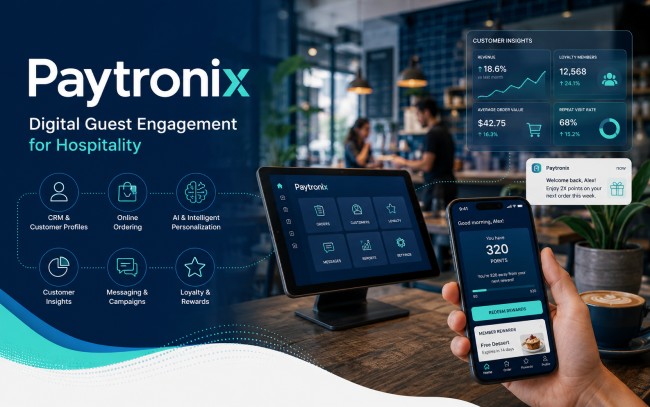
The hospitality industry has changed quickly as customers now expect faster service, easier ordering, useful rewards, and smooth digital payments. Restaurants and convenience stores need technology that helps them meet these expectations while also understanding customer behaviour. Paytronix has developed a strong position in this market by connecting digital engagement tools within one platform. Its services help brands build stronger and more personal relationships with their customers.
Founded in 2001, the company first focused on customer loyalty technology. Over time, it expanded into online ordering, CRM, gift cards, mobile apps, payments, messaging, and artificial intelligence. Today, its platform serves more than 1,800 restaurant and convenience store brands across more than 50,000 locations. Its systems have also handled more than 40 billion customer transactions.
What Is Paytronix?
Paytronix is a cloud-based software company that serves restaurants, convenience stores, and other hospitality businesses. Its main purpose is to help companies understand their customers and improve digital guest experiences. The system collects customer activity from different channels and connects it within one platform. This gives hospitality brands a clearer view of how customers interact with their business.
A restaurant can use the system to understand what customers purchase, how often they visit, which rewards they use, and how they respond to promotions. This allows the business to create offers that match customer interests. Instead of sending the same message to everyone, companies can communicate with different customer groups in more personal ways. This approach can improve loyalty and encourage repeat visits.
History of Paytronix
Paytronix was founded in Massachusetts in 2001. Andrew Robbins and Matt d’Arbeloff played major roles in creating the company, while Stefan Kochi became important to its early technology development. The original idea focused on improving customer loyalty through digital systems. At that time, most restaurant loyalty programmes were much simpler than the systems used today.
The company created technology that connected customer spending with loyalty activity. Restaurants could understand which customers visited regularly and what they purchased. As digital technology improved, the company added more services to its platform. This helped it move beyond simple loyalty cards and become a wider customer engagement business.
Major Investment and Growth
A major stage in the company’s development came in January 2018 when Great Hill Partners announced a $65 million investment. The funding supported technology development, customer growth, and market expansion. By this stage, the company’s services were already being used across thousands of restaurant and retail locations. The investment gave the business greater resources to expand its digital hospitality services.
Paytronix Quick Info
| Category | Details |
|---|---|
| Company Name | Paytronix |
| Founded | 2001 |
| Founders | Andrew Robbins, Matt d’Arbeloff |
| Headquarters | Newton, Massachusetts, USA |
| Industry | Hospitality Technology / Software |
| Parent Company | The Access Group |
| Main Focus | Digital Guest Engagement |
| Brands Served | 1,800+ |
| Locations Served | 50,000+ |
| Transactions | 40+ billion |
| Integrations | 450+ |
| Key Services | Loyalty, CRM, Online Ordering, Gift Cards, AI, Mobile Apps |
| Main Customers | Restaurants & Convenience Stores |
| Notable Brands | Panera, Qdoba, Nando’s, Five Guys |
| Website | www.paytronix.com |
Open Dining Acquisition
In 2019, Paytronix acquired Open Dining, a company focused on online food-ordering technology. This purchase became an important part of its growth because digital ordering was becoming more important for restaurants. The deal allowed online ordering and customer loyalty data to work more closely together. Restaurants could better understand customer purchases while also managing rewards and marketing activity.
The acquisition also helped the company build a stronger digital ordering service. Customers could place orders through websites and mobile applications while restaurants collected useful customer data. This made it easier for businesses to understand both ordering habits and loyalty behaviour. It also supported a more connected digital customer experience.
Additional Funding in 2020
In 2020, the company received another $10 million in financing. This period was important because restaurants were rapidly adopting delivery, mobile ordering, and contactless technology. Customers wanted safer and faster ways to order food and make payments. The additional funding helped the business continue developing technology for these changing needs.
Digital ordering became especially important during this period. Restaurants needed tools that could support online purchases without depending only on traditional in-store service. Paytronix already had ordering and loyalty technology that could help brands adapt. This strengthened the company’s role within the hospitality technology industry.
Paytronix and The Access Group
A major ownership change happened on November 1, 2024, when The Access Group acquired Paytronix. The Access Group is a large software company that provides business technology across different industries. The purchase strengthened its hospitality operations, especially within the United States. The financial value of the acquisition was not disclosed.
The Paytronix brand continued after the acquisition and became part of Access Hospitality. This gives the business access to a wider technology network and more resources for future development. At the same time, it continues to focus on guest engagement technology for restaurants and convenience stores. The acquisition marked another major stage in the company’s development.
Main Paytronix Products and Services
Loyalty Programmes
Customer loyalty remains one of the company’s main services. Restaurants can create programmes based on points, discounts, birthday rewards, special offers, and membership levels. These programmes are designed to encourage customers to return more often. They also give businesses valuable knowledge about customer habits and spending patterns.
Personalised Customer Rewards
Modern loyalty programmes work best when rewards match customer interests. A person who regularly buys coffee may respond better to a coffee-related reward than to an unrelated discount. The platform helps businesses use past purchases and customer activity to create suitable offers. This makes rewards more useful for both customers and companies.
CRM and Messaging
Customer relationship management, also known as CRM, helps businesses organise customer data and communication. The system allows companies to separate customers into groups based on behaviour, spending, and visit frequency. Marketing teams can then send messages through email, text messages, and mobile notifications. This creates more focused communication instead of general promotions.
A restaurant might send one offer to regular customers and another to people who have not visited for several weeks. This can help bring inactive customers back while rewarding loyal visitors. Better communication may also strengthen the relationship between a customer and a brand. Personalisation has therefore become an important part of modern hospitality marketing.
Paytronix Online Ordering
Online ordering is now a major part of the restaurant industry. The platform allows restaurants to accept orders through websites and branded mobile applications. Customers can select food, choose collection or delivery, and complete payments digitally. This creates a faster and more convenient ordering experience.
Direct ordering can also give restaurants more control over customer relationships. Businesses do not have to depend completely on third-party delivery services to manage digital orders. The technology supports more than 30 point-of-sale integrations, making it easier to connect orders with existing restaurant systems. This helps create a smoother process from customer purchase to restaurant operations.
Gift Card Technology
Gift cards are another important part of the company’s services. Businesses can manage both physical and digital gift cards through connected technology. Customers can buy cards for themselves or give them to other people. This can generate advance revenue while also encouraging future visits.
Large restaurant groups can benefit from having one system for gift cards across many locations. Customers can often use their cards at different branches of the same brand. Gift card activity can also connect with loyalty and customer data. This provides businesses with another way to understand customer spending.
Branded Mobile Applications
Mobile apps allow hospitality businesses to communicate directly with customers. Paytronix supports branded applications that can include loyalty, ordering, rewards, payments, and customer account features. Customers can use one app to check points, order food, receive offers, and manage their details. This creates a more convenient digital experience.
The company’s Mobile Experience Builder also gives businesses more control over app content. Hospitality teams can adjust parts of the customer experience without depending on constant technical development. This gives brands greater flexibility when creating promotions or updating digital content. Mobile technology has therefore become an important part of the wider platform.
Artificial Intelligence at Paytronix
Artificial intelligence has become an important area of development for the company. Its platform handles large amounts of customer and transaction data. AI can help businesses study this data and identify patterns in customer behaviour. These patterns can then support better marketing and customer engagement decisions.
For example, technology may identify a regular customer whose visits are becoming less frequent. A restaurant could then send that customer a suitable offer before the person stops visiting completely. AI can help companies respond to these changes more quickly. This can make digital marketing more timely and personal.
Paytronix Assistant
The company has also developed an AI-powered assistant. This tool is designed to help businesses work with platform features, customer data, and hospitality insights. It can support teams that need faster access to useful knowledge. AI may also reduce the amount of manual work required for customer engagement.
Future development could allow more marketing decisions to become automated. Technology may help decide which customers should receive certain offers and when messages should be sent. This does not remove the role of marketing teams, but it can make their work more efficient. It also allows businesses to respond faster to customer behaviour.
Rewards Hub and New Technology
Rewards Hub is another important development within the platform. It gives restaurant and convenience store operators more direct control over loyalty programme settings. Businesses can adjust earning rules, reward values, points, and other programme features. This reduces the need to depend on technical support for every small change.
The company has continued adding self-service tools during 2026. These tools allow hospitality businesses to manage loyalty programmes with greater flexibility. Faster changes can help brands respond to customer needs or seasonal campaigns. This supports a more active and flexible approach to loyalty management.
Guest Intelligence Platform
The Guest Intelligence Platform is designed to connect customer activity across different channels. It can combine loyalty activity, mobile app behaviour, online ordering, and other customer interactions. This helps businesses create a more complete view of each guest. A stronger customer view can support more accurate marketing decisions.
Future development also focuses on AI recommendations, automated actions, customer sentiment, and identifying people who may stop engaging with a brand. These tools could help businesses act before customer relationships become weaker. The goal is to turn customer data into useful actions. This reflects the wider move toward intelligent hospitality technology.
How Large Is Paytronix?
The company now operates on a significant scale within the hospitality industry. Its technology serves more than 1,800 restaurant and convenience store brands across more than 50,000 locations. The platform has processed more than 40 billion customer transactions. It also supports more than 450 technology integrations.
Major brands connected with its technology have included Panera, Qdoba, Nando’s, Five Guys, P.F. Chang’s, Jamba, and Peet’s. These businesses operate across large numbers of locations and serve millions of customers. Supporting such brands requires technology that can manage high volumes of transactions. This helps show the scale of the platform.
Paytronix and Convenience Stores
Restaurants are not the company’s only customers. Convenience stores and fuel retailers also use its digital engagement technology. These businesses can connect fuel rewards, shop purchases, food orders, mobile activity, and promotions. This provides a wider view of customer behaviour.
A customer may buy fuel, purchase food, use a car wash, and collect rewards during different visits. When these actions are connected, the business can understand the customer’s full relationship with the brand. This can help stores create better rewards and promotions. It also makes loyalty programmes more useful across different services.
Business Model and Competitors
Paytronix mainly operates as a business-to-business software company. Its technology is designed for hospitality brands rather than individual consumers. Pricing can depend on the number of locations, company size, services selected, and technical needs. Standard enterprise pricing is not openly displayed.
The company competes with platforms such as Punchh, Thanx, Toast Loyalty, Incentivio, and Olo. One of its strongest advantages is the number of services that can work together within one technology environment. Loyalty, CRM, ordering, messaging, gift cards, payments, and AI can connect with customer data. This can reduce the need for businesses to use many separate systems.
Why Paytronix Matters in Modern Hospitality
Modern hospitality is no longer based only on serving food or selling products. Customers also expect strong digital experiences, useful rewards, quick payments, and personal communication. Businesses need technology that can manage these expectations across stores, websites, and mobile apps. Paytronix provides tools designed to connect these areas.
Since 2001, the company has grown from a loyalty technology provider into a major digital guest engagement business. Its acquisition by The Access Group created another stage in its development. With more than 1,800 brands, over 50,000 locations, billions of transactions, and continued investment in AI, the company holds a strong position in hospitality technology. Its future will depend on how well it continues to connect customer data with simple and useful digital experiences.