Piedmont Natural Gas: Powering Carolinas Homes and Businesses With Reliable Energy
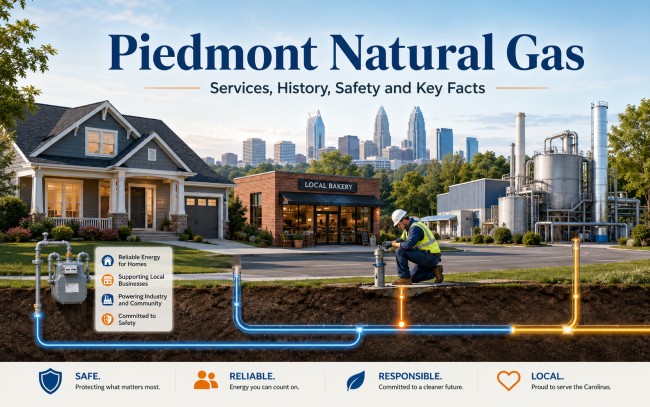
Piedmont Natural Gas is a major regulated natural gas utility based in Charlotte, North Carolina. It serves more than one million residential, commercial, industrial, and power-generation customers. The company operates as a wholly owned subsidiary of Duke Energy, one of the largest energy businesses in the United States. For more than 70 years, the utility has delivered natural gas through a wide underground network. After the sale of its Tennessee operations in 2026, the company now focuses on North Carolina and South Carolina.
What Is Piedmont Natural Gas?
Piedmont Natural Gas distributes natural gas to homes, businesses, factories, public buildings, and power plants. It buys gas from suppliers, moves it through its system, and delivers it to customers who use it for heating, cooking, hot water, manufacturing, and electricity production.
The company does more than sell fuel. It owns and maintains important parts of the delivery network. Its teams inspect pipes, repair equipment, manage pressure, connect new customers, and improve system reliability. State utility commissions review customer rates, major investments, safety work, and service standards. This regulation is designed to protect customers while allowing the company to maintain and expand its network.
History of Piedmont Natural Gas
Foundation and Early Growth
The company was incorporated in 1950 and began operations in 1951. It grew by building natural gas systems in developing towns and cities across the Southeast. In 1994, the business became a North Carolina corporation.
Duke Energy Acquisition
Duke Energy completed its purchase of Piedmont Natural Gas on October 3, 2016. The utility kept its established name and continued to operate as a regulated natural gas provider. The acquisition gave the business access to Duke Energy’s financial strength, engineering knowledge, technology, and long-term investment plans.
Sale of the Tennessee Operations
On March 31, 2026, Duke Energy sold the Tennessee business to Spire for $2.48 billion. The deal transferred more than 200,000 customers and nearly 3,800 miles of pipeline. The former unit now operates as Spire Tennessee. Piedmont Natural Gas currently serves customers in North Carolina and South Carolina only.
Piedmont Natural Gas Quick Information
| Detail | Information |
|---|---|
| Company Name | Piedmont Natural Gas Company, Inc. |
| Founded | 1950 |
| Operations Began | 1951 |
| Industry | Natural Gas Utility |
| Headquarters | Charlotte, North Carolina, United States |
| Parent Company | Duke Energy |
| Current President | Emily G. Henson |
| Service Area | North Carolina and South Carolina |
| Customers | More than one million |
| Main Service | Natural gas distribution |
| Other Services | Gas connections, appliance support, billing plans and business energy solutions |
| Former Service Area | Tennessee, sold to Spire in March 2026 |
| Customer Service | 800-752-7504 |
| Official Website | piedmontng.com |
Where Piedmont Natural Gas Operates
North Carolina
North Carolina is the company’s largest market. Its network reaches Charlotte, Greensboro, Winston-Salem, High Point, Fayetteville, Wilmington, and other communities. Service access can vary by street. A home may be inside a city served by the utility but still be too far from an active gas main. New customers usually need an availability check before planning an installation.
South Carolina
In South Carolina, the company serves customers in Greenville, Spartanburg, Anderson, and Cherokee counties. Its customers include homes, shops, factories, offices, schools, hospitals, and government buildings. The Public Service Commission of South Carolina oversees rates and service rules in the state.
Main Services
Residential Energy
Natural gas is used in homes for heating, water heating, cooking, clothes drying, fireplaces, outdoor grills, pool heating, and backup generators. The company helps customers start, stop, or transfer service. It also supports new connections and conversions from electricity, oil, or propane.
Commercial and Industrial Energy
Businesses often have larger and more complex energy needs. Restaurants use gas for cooking, hotels use it for hot water, and factories use it for production equipment. Piedmont Natural Gas works with builders, engineers, developers, and business owners to plan safe connections. Large customers may also receive help with metering, pressure needs, construction timing, and long-term energy demand.
Appliance and Contractor Guidance
The utility provides guidance for installing natural gas appliances and piping. Customers may also receive help finding trained contractors.
Pipeline Network and Infrastructure
The company manages thousands of miles of distribution and transmission pipes across the Carolinas. Service lines connect the main network to homes and business properties. Pipeline safety requires constant attention. Crews inspect equipment, replace older materials, control pressure, repair damage, and respond to leaks. The utility holds interests in pipeline and gas-storage businesses. These assets help protect supply during high-demand periods, especially in cold weather.
Billing and Customer Assistance
Equal Payment Plan
Winter bills can rise because heating systems run more often. The Equal Payment Plan spreads estimated yearly costs into more even monthly payments. It does not lower total energy use. It helps customers avoid large seasonal changes. Monthly amounts may change when actual use, weather, or gas prices differ from earlier estimates.
Financial Support
Share the Warmth helps qualifying households manage energy costs through customer donations and company support. Some customers may also qualify for state or federal aid. Eligibility depends on income, household size, location, and available funding.
Online and Phone Support
Customers can get help with billing questions, payment options, account changes, service requests, and emergencies. Online tools allow users to view bills, track energy use, and manage payments.
Piedmont Natural Gas Safety Guidance
A gas leak may cause a rotten-egg smell, hissing sound, bubbling water, blowing dirt, or dead plants near a pipeline. Anyone who notices these signs should leave the area at once. They should avoid flames, switches, phones, vehicles, and anything that could create a spark. After reaching a safe place, they should contact the utility or emergency services. Customers and contractors should call 811 before digging. This free service marks underground utility lines and reduces the risk of damage during landscaping, fencing, or construction.
Environmental Work
The company offers GreenEdge, a voluntary program that helps customers support carbon-reduction projects. Participants pay an added monthly amount that funds verified carbon offsets and renewable natural gas benefits. GreenEdge does not stop emissions at a customer’s property. It supports approved projects that reduce or balance emissions elsewhere. The company also invests in methane control, pipeline replacement, energy efficiency, and system improvements. These steps support safer operations and lower environmental impact.
Leadership and Ownership
Emily G. Henson became president of the company and senior vice president of Duke Energy’s natural gas business on April 1, 2026. Her work covers safety, operations, customer service, regulation, investment, and planning. Duke Energy provides the wider corporate structure. Its size gives the utility access to capital, technology, and skilled teams. However, state commissions still control many key business decisions.
Rates and Regulation
Customer bills may include the cost of natural gas, delivery service, infrastructure, taxes, and approved fees. Gas prices can rise or fall based on market conditions. The fuel cost is normally passed through to customers rather than treated as utility profit.
In 2026, North Carolina customers received rate reductions linked to lower gas costs. In South Carolina, the company requested a base-rate increase to support system investment and operating needs. Any final change depends on regulatory approval.
Why Piedmont Natural Gas Matters
Piedmont Natural Gas supports daily life across the Carolinas. Homes depend on it for heat and hot water. Restaurants use it for cooking. Hospitals, schools, factories, and power plants rely on steady energy delivery. Its role goes beyond supplying fuel. The company maintains essential infrastructure, supports business growth, responds to emergencies, and invests in safer systems.
With decades of experience, Duke Energy ownership, and a focused Carolinas service area, the utility remains an important part of the region’s energy network. Its future will depend on reliable service, fair rates, modern infrastructure, customer trust, strong safety standards, and responsible environmental progress.